The government published a revised National Planning Policy Framework on 17 August 2026, and updated it on 29 September 2026. It applies to plan-making and to decisions on development proposals in England.
Chapter 18 deals with flood risk and coastal change. Within it, policy F8 sets out when proposals should use sustainable drainage systems and how those systems should be designed and looked after.
What policy F8 requires
Development proposals that could affect drainage on or around the site should incorporate sustainable drainage systems to control flow rates and reduce runoff volumes, in ways that are proportionate to the nature and scale of the proposal. Where possible, the systems should also provide multifunctional benefits, including improvements in water quality, biodiversity and amenity.
Policy F8 then sets three tests for those systems. They should be designed in accordance with the National Standards for Sustainable Drainage Systems. They should have maintenance arrangements in place so that they work to an acceptable standard for the anticipated lifetime of the development. And, for major development, they should take account of advice from the Lead Local Flood Authority.
The same policy also deals with watercourses. Proposals should not enclose existing watercourses where this is not already the case, unless there are compelling reasons to do so. Where possible they should remove existing culverts and renaturalise river channels, unless that would increase flood risk, cause other environmental harm or harm heritage assets.
What this means for a planning application
Applicants should expect the local planning authority to look for a clear drainage strategy that shows how surface water will be controlled, and how the scheme meets the National Standards. Maintenance cannot be left as an afterthought: F8 requires arrangements that last for the life of the development.
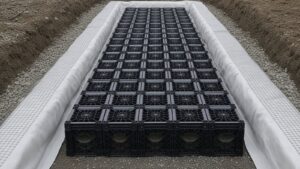
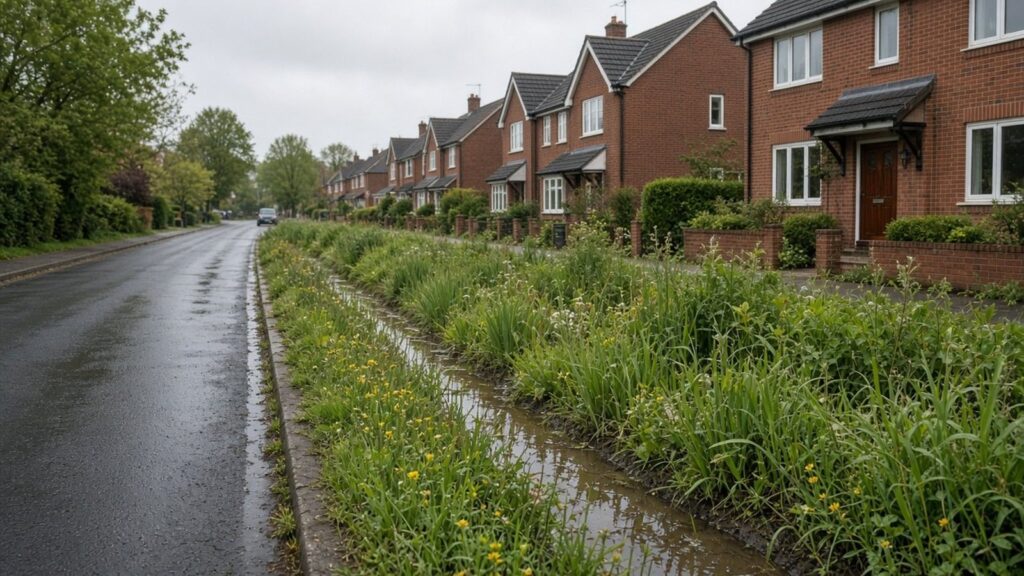
Good SUDS design and installation still turns on the features that suit the site, from permeable paving and planted channels to storage below ground. If you are preparing a planning application in England, we can help you shape a scheme that answers policy F8 in a practical way.